
You can also read this on Medium here: https://medium.com/@emilystepp12/would-jesus-wear-a-rolex-the-religious-song-everyone-should-hear-ea565938a40b
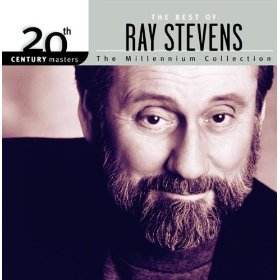
Although comedic in nature and tone, Ray Stevens’ song Would Jesus Wear a Rolex is surprisingly effective in its message.
Why?
Before looking in depth at the lyrics, let’s take a look at the form and style of the song. The tune is constructed to be reminiscent of an evangelist or southern baptist service; it features a choir that echoes the sound of southern baptist traditions, providing a nice harmony and backing to Stevens’ main vocals.
Stevens himself employs the style and tone of an evangelist preacher — that is, he is animated and loud, and uses a certain emphasis in his words that is immediately recognizable as a “televangelist” type of sermon.
By using this style that is reminiscent of the very tradition he is critiquing, his argument is made much more effective and impactful (not to mention catchy).
Alright, so we’ve got an idea of the style — now let’s see about these lyrics. I’ll go through it roughly stanza by stanza.
Woke up this mornin’, turned on the t.v. set
There in livin’ color, was somethin’ I can’t forget
This man was preachin’ at me, yeah, layin’ on the charm
Askin’ me for twenty, with ten-thousand on his arm
He wore designer clothes, and a big smile on his face
Sellin’ me salvation while they sang Amazin’ Grace
Askin’ me for money, when he had all the signs of wealth
I almost wrote a check out, yeah, then I asked myself…
Stevens opens by setting the scene, and setting up his critiques in just a few verses. “Asking me for twenty, with ten-thousand on his arm” is the first clue that the listener gets that this is not going to be in praise of televangelists (if the title of the song didn’t give it away already).
“Selling me salvation while they sang Amazin’ Grace” is especially interesting, and hints at a deeper meaning than a humorous song about televangelists; Amazing Grace is an undeniably popular song in Christianity, and one could argue that it’s a humble song, in which the singer praises God for helping them in their time of spiritual need. By contrasting this with the notion of “selling salvation,” Stevens bolsters his thesis before he gets to the chorus; in other words, how can one “sell salvation” while also singing the praises of a God that notably does not accept money in exchange for salvation?
This brings him to the build-up and chorus of the song:
Would He wear a pinky ring, would He drive a fancy car?
Would His wife wear furs and diamonds, would His dressin’ room have a star?
If He came back tomorrow, well there’s somethin’ I’d like to know
Could ya tell me, Would Jesus wear a Rolex on His television show
Stevens becomes more direct here, naming physical signs of wealth that are often seen on televangelists, until he finally ties it all together with that rhetorical question: Would Jesus wear a Rolex on His television show?
The only remaining verses in this short song, besides a repeat of the chorus, is this one — and here is where Stevens brings back the contrasting imagery from the first verses:
Would Jesus be political if He came back to earth?
Have His second home in Palm Springs, yeah, a try to hide His worth?
Take money, from those poor folks, when He comes back again
And admit He’s talked to all them preachers who say they been a talkin’ to Him?
Stevens’ first question is interesting; in these polarized times you may get a different answer depending on who you talk to. But overall I think what Stevens is critiquing here is that televangelists often appear to preach ideas that fall in line one way instead of the other, and that perhaps that way does not reflect the teachings of Jesus, which he gets into in a couple more verses.
(Although I personally find that a good answer to this might be “If ‘love your neighbor’ and ‘help the poor’ is too political for you, you may wish to reexamine your outlook.”)
“Have His second home in Palm Springs, yeah, a try to hide His worth?” is another contrast Stevens uses, by mentioning another sign of wealth that seems to follow televangelists, and then critiquing it by pointing out that evidently, televangelists attempt to hide their worth.
“Take money from those poor folks, when He comes back again, And admit he’s talked to all those preachers who say they been a talkin’ to Him?” is the final contrast and critique, and arguably one of the ones that hits the hardest.
Notice that Stevens says take money — not “receive” not “accepts” — takes. It suggests predatory behavior, as if the televangelist were stealing from the poor. I would argue that here he is suggesting that televangelists do not simply accept donations for altruistic reasons, but rather swindle them and effectively take their money.
As for “And admit He’s talked to all those preachers who say they been a talkin’ to Him?” I think this is mostly a more comedic jab, poking fun at televangelist preachers who might claim that God told them to buy a jet plane, or not go to a doctor for cancer treatment, or any number of things.
I can’t imagine this song being sung in any other style or tone than this; it’s an effective, catchy, and impactful argument. By using comedic language throughout his contrasting imagery, Stevens seems to suggest that maybe televangelists shouldn’t be taken seriously. That they are, at the end of the day, people “selling salvation” and asking for money while wearing a Rolex — and maybe people who do that can be laughed at comfortably.
 Wallflower Showcase